Clear trimming goals
We confirm the reason for the cut first: roof and gutter clearance, driveway clearance, wind load reduction, deadwood removal, or balancing the canopy after limb loss.
Serving San Antonio, Texas & surrounding areas
Mon–Fri 8am–6pm · Sat 9am–2pm
Tree cutting service in San Antonio
Get safer limbs, better clearance, and cleaner lines with a crew that shows up prepared, protects your property, and hauls away the debris.
✓Controlled cuts near structures
✓Written scope before cutting
✓Debris haul-off and cleanup
Planned pruning
If you searched for tree cutting San Antonio, you're probably dealing with one of three problems: branches too close to your roof, limbs hanging over a driveway or fence line, or a tree that has started to look uneven after storms and fast growth.
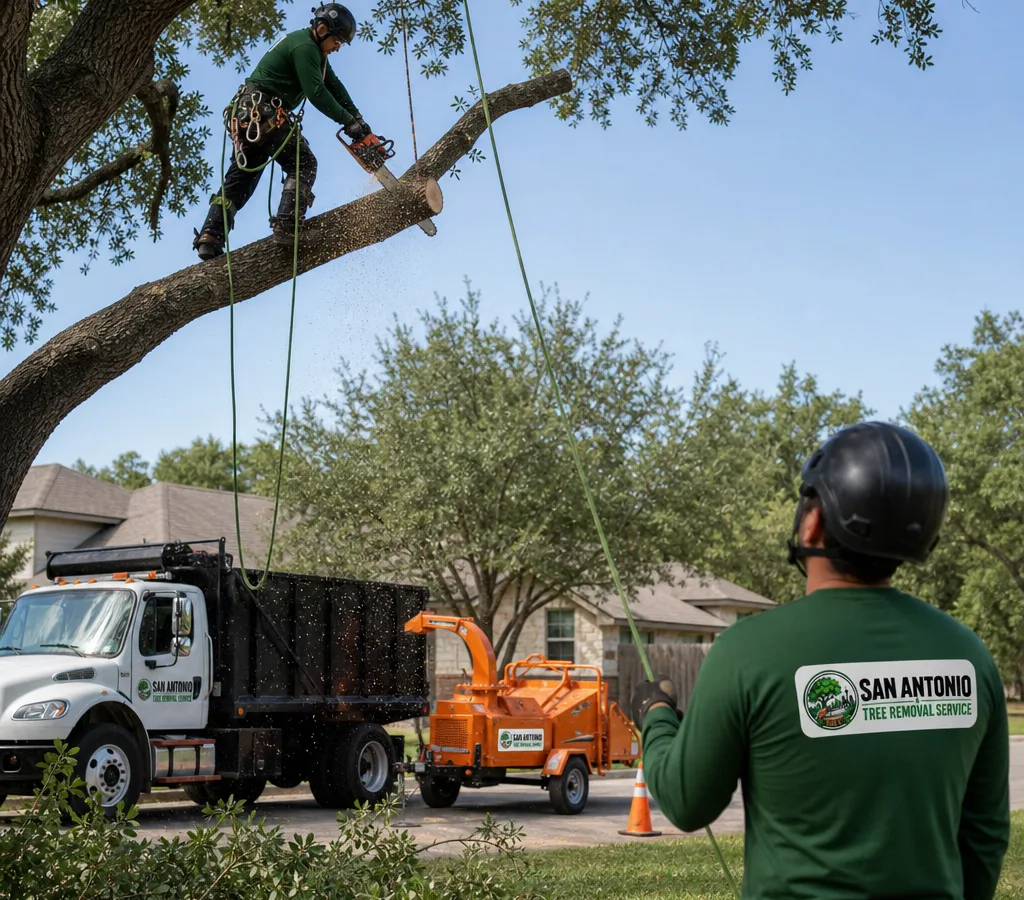
At San Antonio Tree Removal Service, our tree cutting work focuses on controlled trimming and pruning, with the right cuts in the right places so the tree stays healthy and your home stays protected. That means assessing limb weight and direction, choosing safe tie-in points, and using proper pruning cuts—not topping and not leaving long stubs.
San Antonio has plenty of mature trees in established neighborhoods, and that can mean heavy limbs over homes, tight access around fences, and landscaping you don't want torn up. We plan the drop zone, protect surfaces, and keep cleanup straightforward so you're not left with a yard full of brush.
If you also need full tree removal for a hazardous or failing tree, that is a different scope and is priced differently. Many homeowners start by comparing options with a tree removal service in San Antonio to decide whether trimming or removal makes the most sense.
Complete trimming scope
We confirm the reason for the cut first: roof and gutter clearance, driveway clearance, wind load reduction, deadwood removal, or balancing the canopy after limb loss.
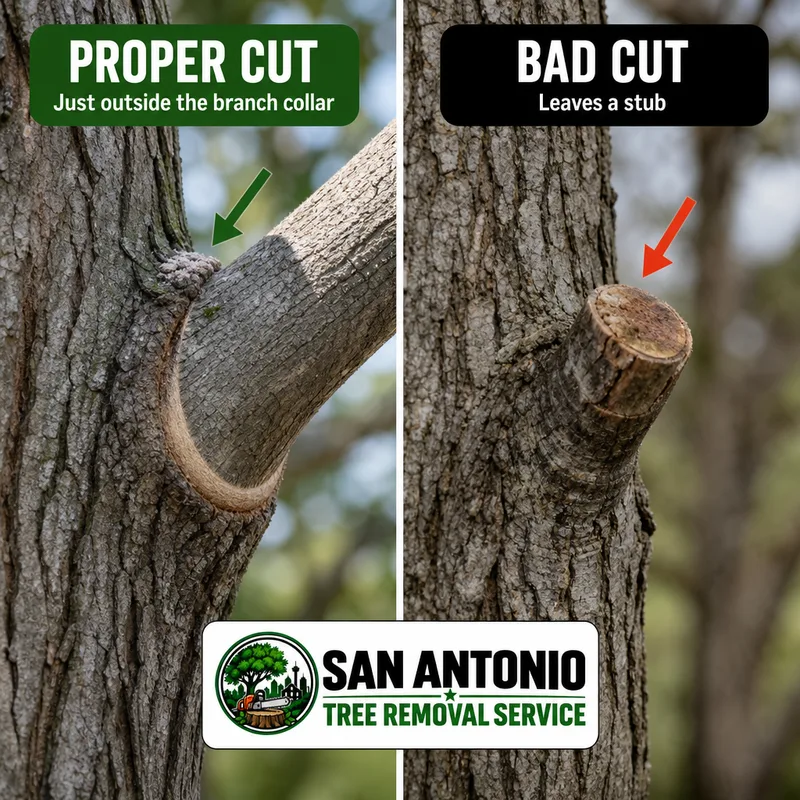
Good pruning respects the branch collar and avoids ripping bark. We avoid topping because it often creates weak regrowth and a higher long-term maintenance burden.
For limbs over roofs, fences, or patios, we use ropes and controlled lowering so large sections don't swing or free-fall into structures.
We stage equipment to reduce turf damage, set a work zone, and manage falling debris so your yard and hardscapes aren't the price of getting the job done.
Brush and wood get hauled off, and the work area is blown down. If you want to keep firewood-sized pieces, let us know and we can discuss safe stacking.
You should know what gets cut, what stays, and what cleanup is included before any saws start.
Selective pruning
Pruning is not the same as taking a tree down. The goal is to remove specific branches to improve safety, clearance, and structure while keeping the tree stable.
Common requests we handle:
We also watch for issues that affect how far we can prune in one visit. Over-pruning can stress a tree and trigger weak regrowth. If a tree is already leaning, has major decay, or has split leaders, we'll explain whether trimming is likely to be short-lived and what alternatives look like.
For homeowners scheduling tree trimming San Antonio TX, the biggest wins usually come from targeted cuts: clearance near the roofline, removing end-weight on long limbs, and taking out deadwood before it breaks.
Inspection to cleanup
We look at targets—roof, vehicles, fences—access, and the tree's structure. If overhead utilities are nearby, we plan the work zone and approach around them.
You get a clear, written scope: which trees, which sides, what clearance goals, whether rigging is expected, and what debris handling is included.
We stage ladders, ropes, and drop zones. Larger limbs get pieced down with controlled lowering when there's any risk to structures.
Brush and wood are removed, the area is blown off, and we review the canopy lines and clearance with you before we wrap up.
Inspection-based pricing
Tree trimming cost in San Antonio typically ranges from about $200 to $900 for most residential jobs, with small pruning visits often near $150 to $350 and larger, multi-tree trims commonly $600 to $1,500+ depending on access and complexity.
Your final price changes with tree height and limb diameter, proximity to roofs and power lines, the amount of rigging required, ease of backyard access, and how much debris is hauled away. The exact cost is confirmed after a quick on-site look so the scope matches the conditions in your yard.
Practical results
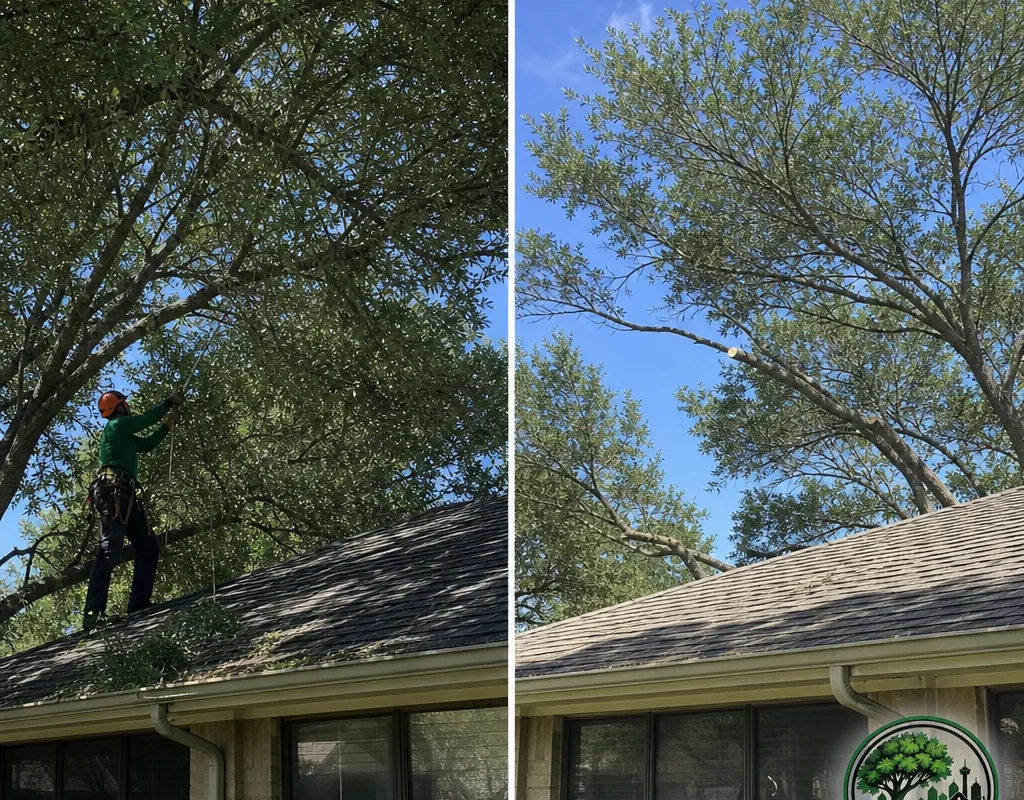
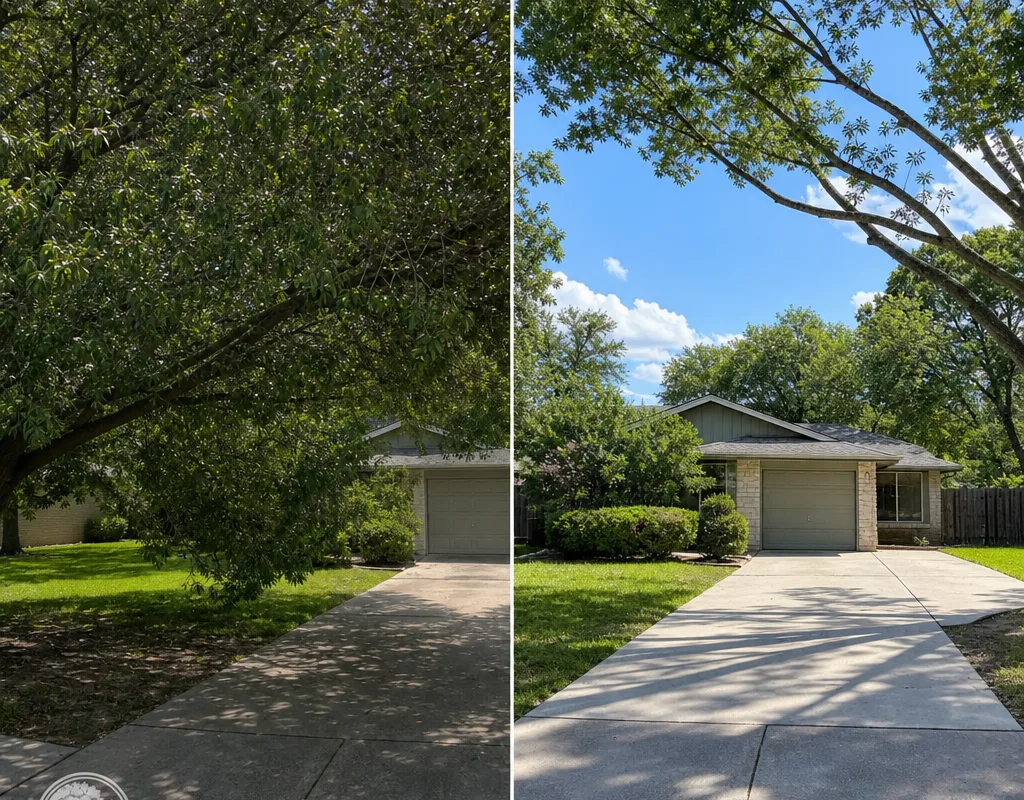
If you want the tree to look better after it's cut, ask for a scope that spells out canopy goals, clearance targets, and cleanup so the finished result matches what you pictured.
Book Your Free InspectionDecision support
For most homeowners, tree cutting means trimming or pruning specific limbs rather than removing the whole tree. Trimming usually focuses on clearance and shaping, while pruning is more selective and structure-focused—deadwood, crossing limbs, and weight reduction. If the tree is unsafe or failing, full removal may be the better option, but that is a different scope than routine trimming.
A practical rule is to trim back branches that touch the roof or hang close enough to scrape shingles in the wind. Roof-contact limbs can damage roofing and gutters and create easy access for pests. We can set a reasonable clearance line based on the tree type, limb size, and how much sway you get at your home.
If branches are tangled in or immediately adjacent to energized lines, that work often needs coordination with the utility and may be restricted for safety. If limbs are nearby but not in contact, we can sometimes prune with a conservative approach and controlled rigging. We'll flag utility proximity during the walk-through and recommend the safest path.
Yes, cleanup and haul-off can be included so you are not left with piles of brush. If you prefer to keep larger wood for firewood-sized pieces, tell us ahead of time so we can plan safe cutting lengths and stacking locations.
Many single-tree trims take a few hours, while multi-tree or complex rigging jobs can take most of a day. Time depends on access, especially fenced backyards, the number of cuts needed, and whether we are lowering limbs by rope to protect roofs and fences.
Some trees respond to heavy cutting with fast regrowth, especially if too much canopy is removed at once. That regrowth can be weakly attached if the tree was topped or cut back harshly. We use selective pruning and reduction cuts to manage size while keeping the tree's structure stronger over time.
Move vehicles out of the work zone, clear access to gates, and point out anything you want protected like fragile landscaping, irrigation heads, or outdoor décor. If you have pets, plan to keep them inside while cutting and hauling are underway. A quick walkthrough at the start makes the day smoother and helps avoid accidental damage.
Plan the cuts before work starts
Tell us what you're trying to fix, clearance, safety, storm damage, or shaping, and we'll put together a written scope with a fair quote and a cleanup plan that fits your property.