Clear scope before any cutting
We walk the tree with you, explain what we see, and outline what will be pruned, reduced, or removed so the outcome matches your priorities.
Serving San Antonio, Texas & surrounding areas
Mon–Fri 8am–6pm · Sat 9am–2pm
Certified tree care in San Antonio
Get an expert plan for safer trees, fewer storm worries, and cleaner curb appeal, with careful work around roofs, fences, and power lines.
✓Informed tree-risk assessment
✓Controlled rigging near property
✓Debris haul-off and cleanup
Assessment before action
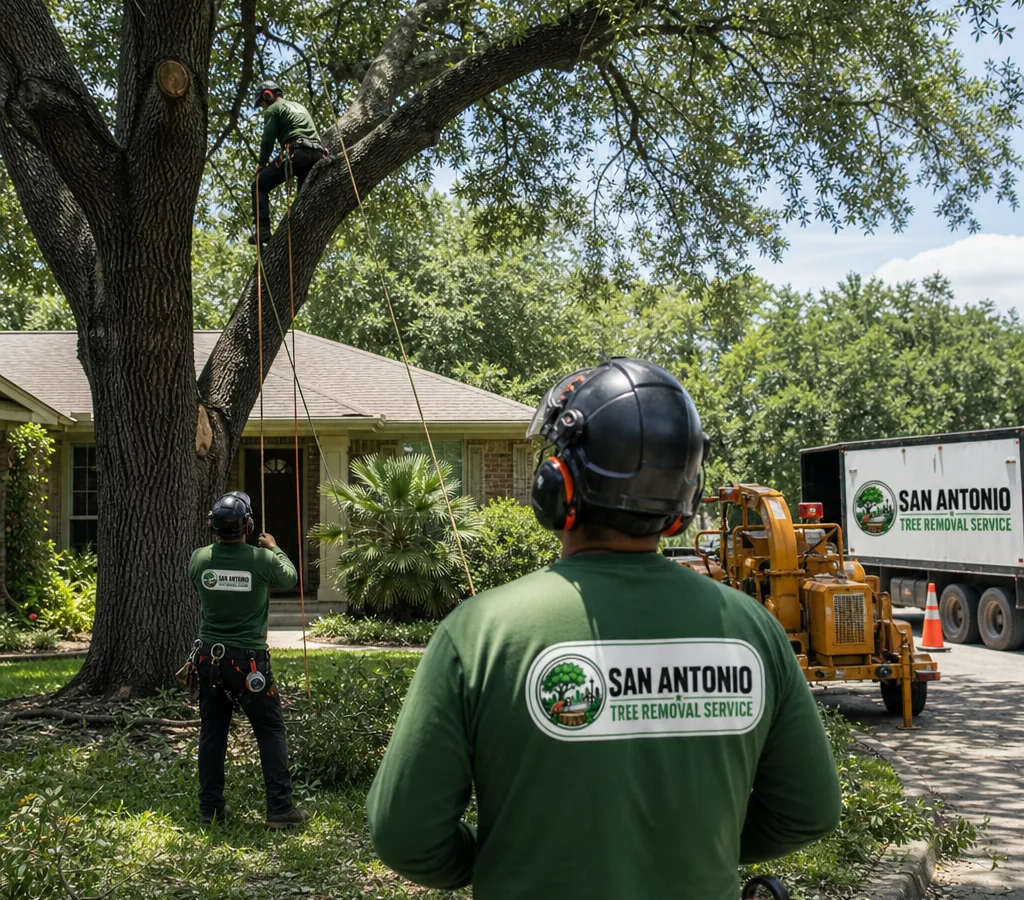
When you search for certified tree care San Antonio, you are usually trying to solve a real problem: a tree is leaning, dropping deadwood, rubbing a roof, or growing into a tight space where one mistake can damage your property. Certified tree care means the work starts with an informed assessment of structure, defects, and risk, not a guess based on how the tree looks from the street.
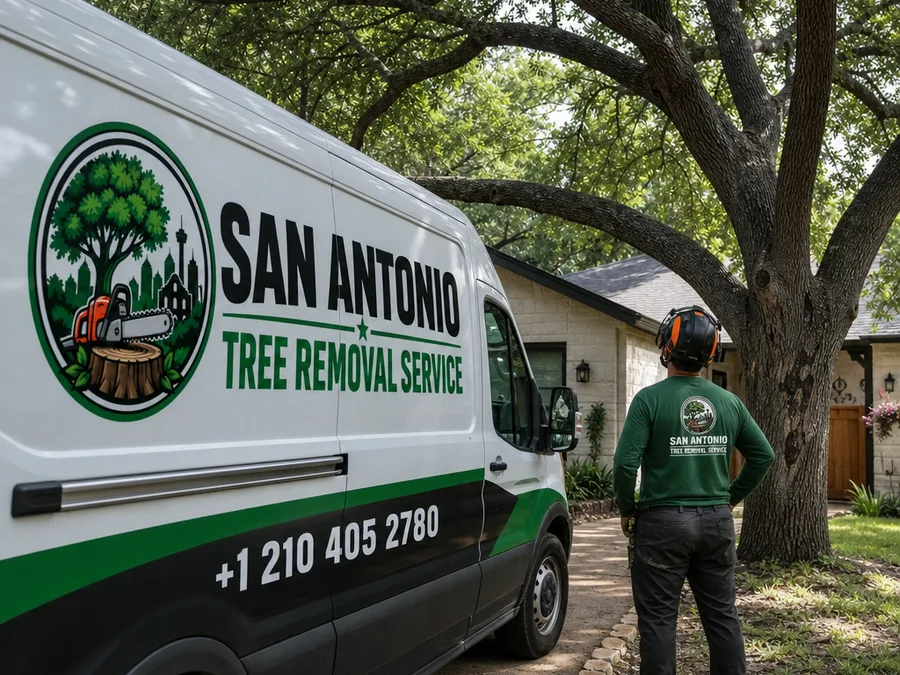
San Antonio trees also deal with stress that shows up fast: long hot stretches, sudden heavy rain, and strong storm lines that can turn weak unions into failures. Good tree care balances safety, tree health, and your goals for shade and clearance. Our team at San Antonio Tree Removal Service focuses on practical recommendations, clear communication, and careful execution, whether you need pruning, risk reduction, or a removal plan for a tree that is no longer safe.
If you are comparing providers, a good first step is to ask how the crew will protect nearby targets—roof edges, fences, vehicles, and pedestrian areas—what rigging approach they expect to use, and what will happen with debris and stump options after the work is complete.
Complete care scope
San Antonio tree care is broader than a single visit to cut branches. A certified approach typically includes:
You should also expect basics that protect your property: controlled lowering with ropes when needed, work-zone setup so bystanders stay clear, and a cleanup plan that leaves the yard usable. Removal work follows the same safety-first approach when it forms part of a broader care plan.
Property-first execution
We walk the tree with you, explain what we see, and outline what will be pruned, reduced, or removed so the outcome matches your priorities.
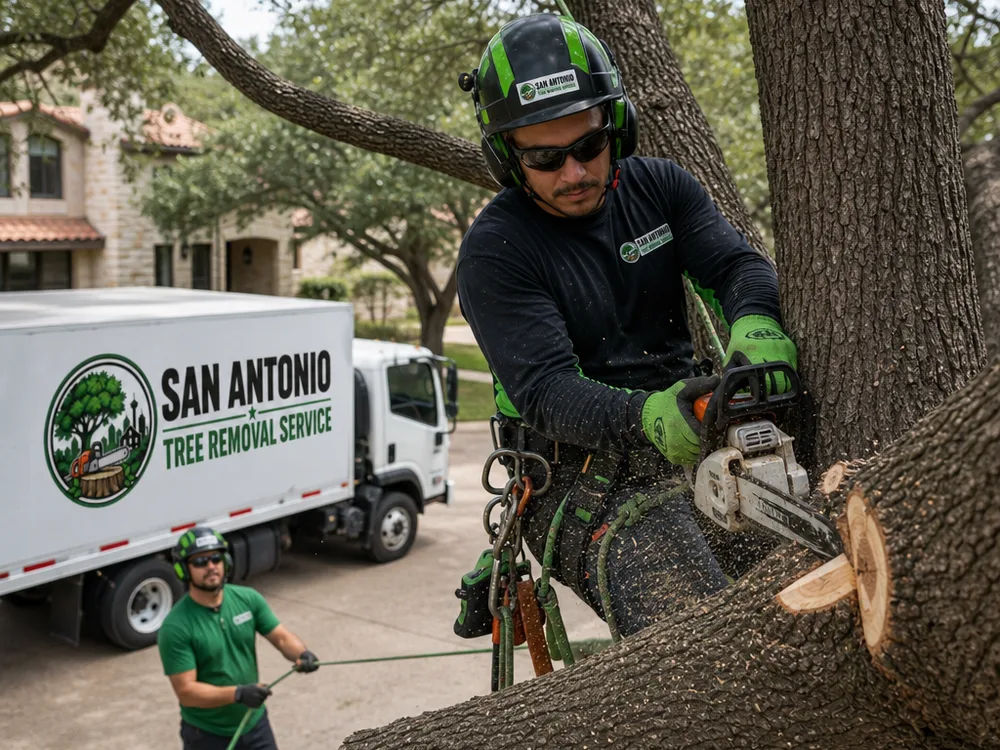
When a tree sits near roofs, fences, or narrow side yards, we plan rigging and drop zones first, then size pieces to control descent.
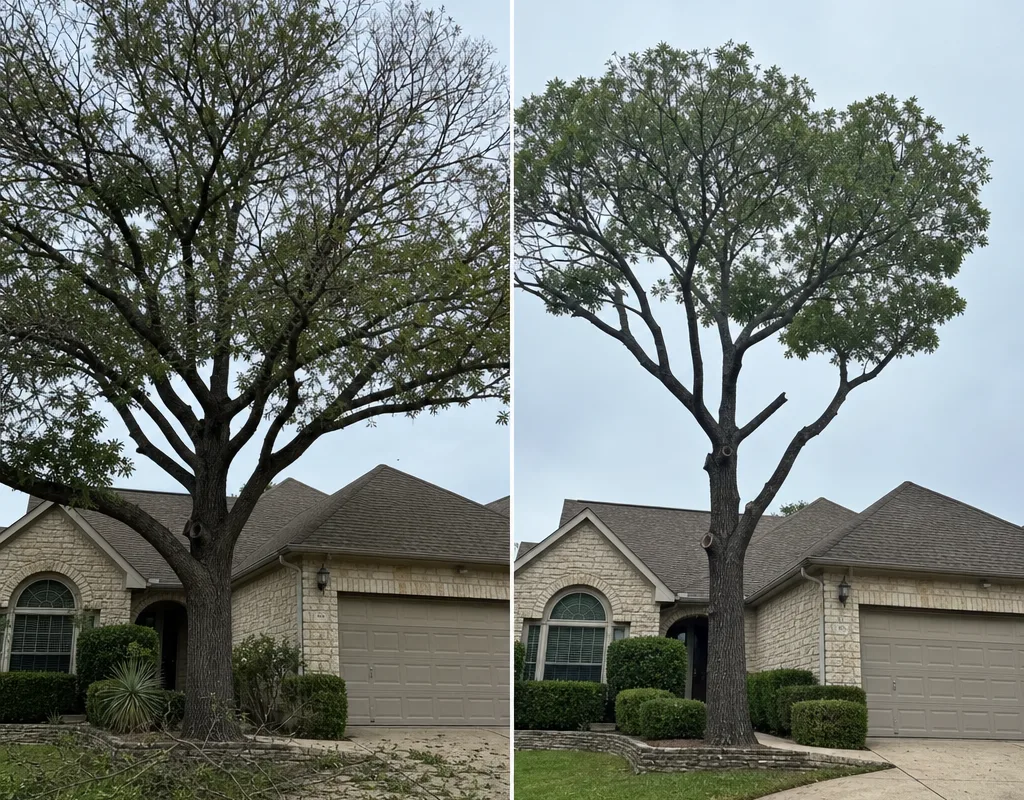
Correct cuts and measured reductions help avoid unnecessary stress, reduce future breakage points, and keep the canopy looking natural.
After wind events, the goal is to make the site safe quickly, then decide what can be restored with pruning versus what needs removal.
We chip and haul debris, rake the work zone, and leave you with a straightforward next step if you want stump grinding or follow-up care.
Inspection to cleanup
We look at the whole tree: canopy structure, visible defects, proximity to targets, and access for equipment. If a utility line is involved, we talk through safe clearance expectations and what work may need utility coordination.
You get a clear scope with practical options, such as deadwood removal plus a light reduction, or phased work if multiple trees need attention.
Before cutting starts, we stage equipment, establish a drop zone, and plan how limbs will be lowered if free-falling is not safe.
We use climbing and rigging methods appropriate to the tree and the site. Cuts are made to reduce failure points while keeping the tree balanced.
We chip, haul, and rake the area. Then we walk the results with you and flag any watch-items, like new cracks, root-zone issues, or trees that should be rechecked after the next storm season.
Inspection-based pricing
Certified tree care in San Antonio typically ranges from about $250 to $900 for routine pruning on a single tree, while larger, higher-risk work—heavy reductions, tight access, or complex rigging—often runs $900 to $2,500+. Small storm-damage cleanups may fall in the $300 to $1,200 range depending on what is hanging and where it sits.
Final pricing depends on tree size and species, canopy density, height over targets, access for trucks and chippers, disposal needs, and whether the job requires advanced rigging or removal. Exact cost is confirmed after an on-site evaluation of the tree and the work area.
Practical results
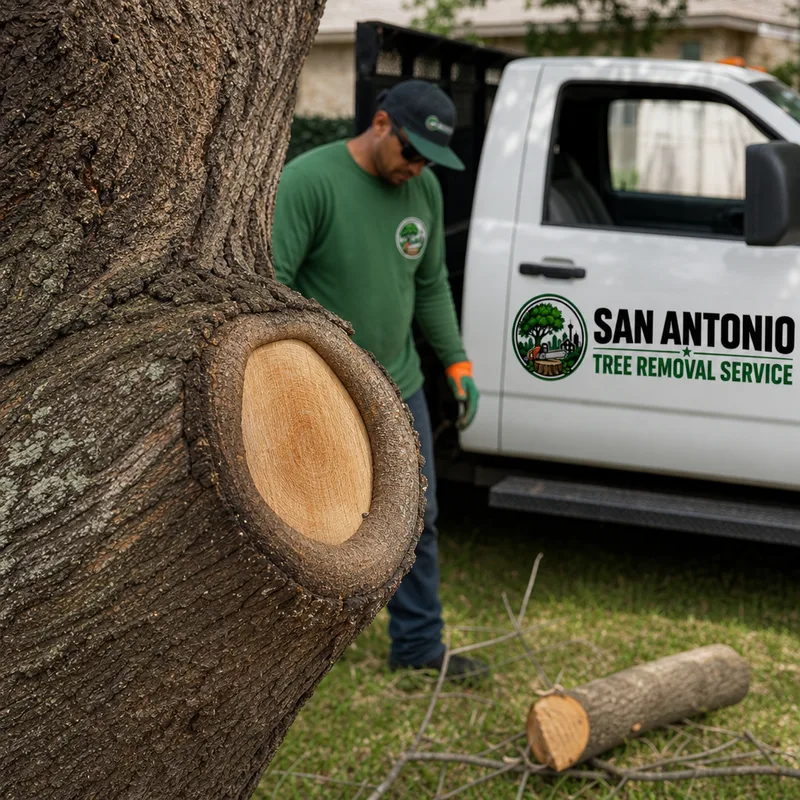
“We had big limbs over the driveway and one was starting to crack. They explained what they were going to remove, rigged everything down in pieces, and the cleanup was better than I expected.
“After a storm, they made the yard safe the same day and then talked through what could be pruned versus what needed to come out. The plan was straightforward and the work felt controlled the whole time.
Decision support
If safety, tree health, or liability is part of the decision, a certified professional is a smart choice. An arborist-level assessment helps identify structural defects, such as weak unions or dead leaders, and choose pruning that reduces risk instead of creating it. This matters most when limbs hang over roofs, driveways, and high-traffic areas.
We recommend pruning when the tree can be made reasonably safe through deadwood removal, structural pruning, or measured reduction, and when the trunk and main unions are sound. Removal becomes the safer option when there is severe decline, major structural failure, or the tree's position makes controlled work impractical. The decision is based on defects, targets, and how the tree is likely to behave in wind.
Work near energized lines requires extra caution and, in many cases, utility involvement for certain clearances. If a tree is contacting or extremely close to service drops or distribution lines, we will discuss safe boundaries and whether the utility should address the line side first. The goal is to reduce risk without putting people or property in danger.
Treat any newly hanging limb, fresh cracks at branch unions, sudden leaning, or heaving soil at the base as a safety issue. Keep people away from the drop zone and get the tree assessed before you move debris underneath it. Even if nothing has fallen, a new split or a partially failed limb can let go later.
Many single-tree pruning jobs finish in a few hours, while complex multi-tree work or rigged removals can take most of a day. Timeline depends on canopy size, access, how much material must be lowered versus dropped, and how far debris has to be moved for chipping and hauling. You will get a realistic time window when the scope is set.
Yes, hauling and cleanup are typically part of professional tree care unless you specifically want to keep wood for firewood or habitat. If you prefer certain logs left in manageable lengths, say so during the evaluation so we can plan cutting, staging, and loading accordingly.
Plan before the next storm
Tell us what you are seeing, where the tree sits on the property, and what your priorities are. We will assess the risk, recommend the right level of pruning or removal, and leave you with a clean, safe work area when the job is done.