
Containment-first recommendations
We prioritize steps that reduce the chance of spread: limiting fresh wounds, planning work around risk periods, and setting clear boundaries on what should not be cut yet.
Serving San Antonio, Texas & surrounding areas
Mon–Fri 8am–6pm · Sat 9am–2pm
Oak wilt service in San Antonio
If you are seeing rapid leaf browning, thinning canopies, or sudden branch dieback on live oaks, get a practical plan fast: diagnosis support, removal when needed, and trim timing guidance that helps limit spread and protect your property.
✓Containment-minded planning
✓Season-aware trim guidance
✓Controlled removal and cleanup
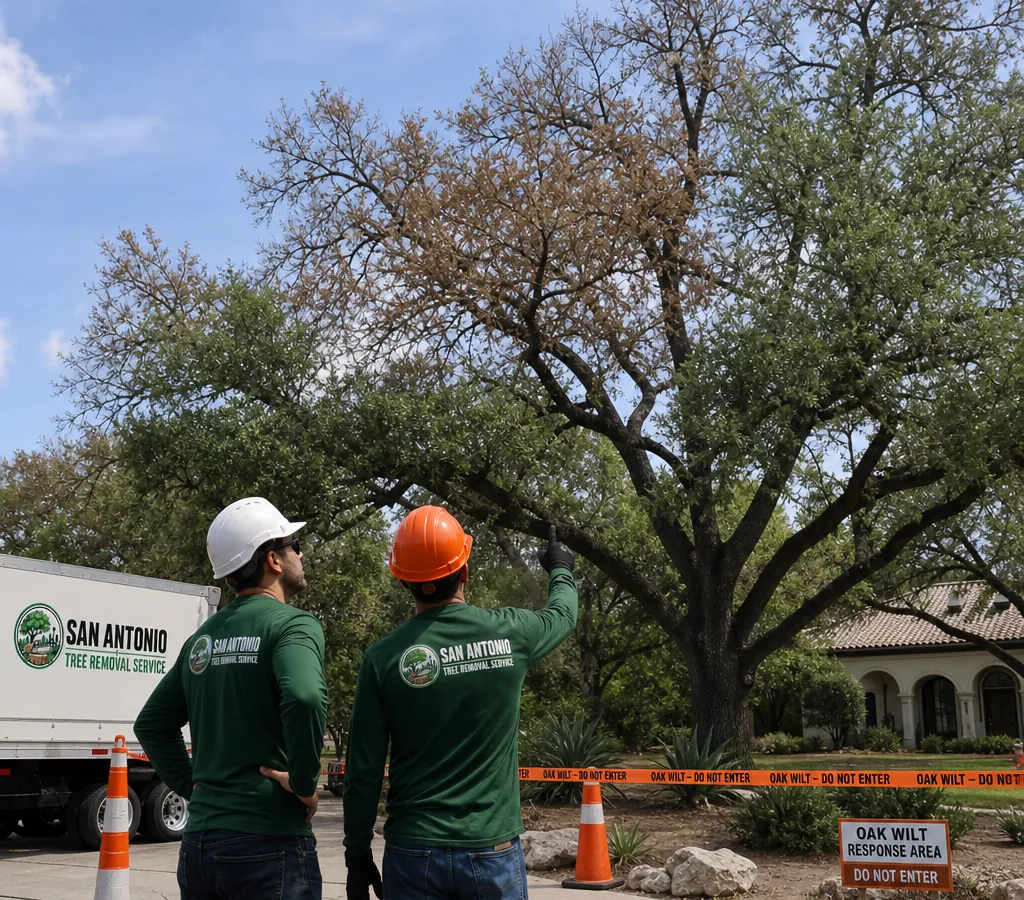
Time-sensitive response
Oak wilt in San Antonio is time-sensitive. The fungus can move through connected root systems between nearby oaks, and fresh cuts can attract sap-feeding beetles that may carry spores from infected red oaks to healthy live oaks.
If you suspect oak wilt, the safest next steps are simple:
San Antonio Tree Removal Service helps homeowners and property managers with practical next steps for oak wilt in San Antonio: what can be trimmed, what should not be touched yet, and when removal is the safest option for a diseased or failing oak.
Recognize the warning signs
In the San Antonio area, live oaks and red oaks behave differently with oak wilt. Red oaks often decline quickly and can become a major spore source, while live oaks may show sector-by-sector leaf drop and thinning as the disease moves.
A site visit is warranted when you see:
On many properties around established neighborhoods like Alamo Heights and Terrell Hills, oaks can be close enough for shared root zones. That proximity is great for shade, but it can raise the stakes when disease is involved. We focus on fast, careful evaluation and clear recommendations so you are not guessing with a chainsaw.
If you also need help with general tree removal in San Antonio, the same visit can confirm what is safe to keep versus what has become a liability.
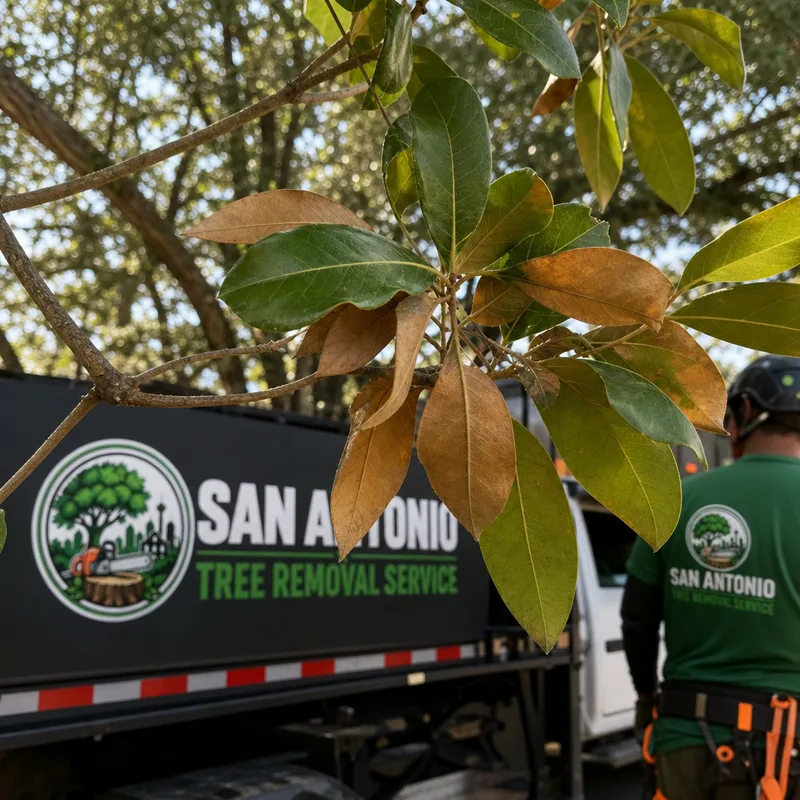
Containment and property protection
We prioritize steps that reduce the chance of spread: limiting fresh wounds, planning work around risk periods, and setting clear boundaries on what should not be cut yet.
When an oak is too far gone or poses a risk to structures, we plan removal with access, drop zones, and control of debris so the job stays predictable.
You get straightforward advice on when to trim oak trees in San Antonio, what can wait, and how to handle storm damage without creating avoidable exposure.
Tight side yards, fences, nearby roofs, and overhead service lines change the approach. We walk the site and build a plan that fits the space you actually have.
We keep work areas controlled, manage brush and wood responsibly, and leave the site clean so your landscape and hardscapes are not the price of getting the tree handled.
Season-aware pruning
The most useful rule for homeowners is this: avoid pruning oaks during the highest-risk times when insects are active and fresh wounds are most likely to attract them. That risk window is often described locally as the warmer months.
Because weather varies year to year, you will hear different dates. Instead of treating it like a fixed calendar, we look at:
If pruning cannot be delayed, the priority becomes wound management. Many local guidelines recommend promptly painting fresh oak wounds with a suitable pruning sealer to reduce attraction to beetles. The right approach depends on what is being cut, how fresh the cut is, and the overall risk on the property.
If your question is specifically about oak wilt season in San Antonio, we can walk you through what is typical for the year you are in and what choices reduce risk for your block.
Assessment to guidance
We look at canopy condition, likely causes, targets below the tree, access for equipment, and whether nearby oaks suggest a broader risk. If oak wilt is suspected, we discuss containment-minded options first.
You get a clear scope for removal or pruning and a plan for timing. When work needs to happen during higher-risk periods, we spell out the wound-sealing and handling steps we will use.
We set drop zones, protect vulnerable areas, and cut in a way that fits the property. We manage brush and wood so you are not left with piles or damaged turf.
After cleanup, we review what was done and what to watch for on nearby oaks. If you have multiple oaks, we will also talk through what future trimming should wait for safer timing.
Inspection-based pricing
Oak wilt-related tree removal in San Antonio typically ranges from $450 to $2,500+ per tree, depending on size, access, and risk. A smaller oak with clear access may fall toward the low end, while a large live oak over a roof, driveway, or tight side yard can cost more because it requires more controlled rigging and labor.
Final pricing changes with trunk diameter, proximity to structures, overhead lines, haul-off needs, stump handling, and whether work must be staged to protect surrounding oaks during higher-risk seasons. The exact cost is confirmed after an on-site assessment of the tree and the work area.
Customer proof
“We thought it was just heat stress until the canopy started dropping fast. They explained what looked like oak wilt risk, helped us avoid pruning at the wrong time, and removed the worst tree without tearing up the yard.
“Our live oak was close to the house and we were worried about both the roof and spreading issues to the other oaks. The plan was clear, the work area stayed controlled, and the cleanup was better than we expected.
Decision support
If oak wilt is suspected, it is usually safer to pause non-urgent pruning until the tree is evaluated, because fresh wounds can increase exposure during active insect periods. If there is an immediate hazard, such as broken limbs or hanging branches, the priority is safety, and pruning should be done with risk-reduction steps such as promptly sealing fresh oak cuts when recommended by local guidance.
In San Antonio, oak wilt risk is typically treated as higher during warmer months when insect activity is up and fresh wounds are more likely to attract vectors. Because the exact timing shifts with weather, the most reliable approach is to plan elective trimming for lower-risk periods and treat any necessary warm-season cuts as higher risk, with careful wound management and site-specific precautions.
Routine oak pruning is best scheduled for lower-risk times of year rather than during peak insect activity. If you are planning standard clearance, thinning, or deadwood removal, we can help you pick a window that reduces oak wilt risk and set a scope that avoids unnecessary cuts.
Stump removal is optional and depends on your plans for the space and the site access for grinding equipment. For oak wilt-related situations, the bigger priority is safe removal and handling of debris; stump work can often be added if access allows, or scheduled as a separate step when conditions are right for your yard.
Yes, oak wilt can spread from tree to tree, especially among nearby live oaks through connected roots, and from infected red oaks via spores carried to fresh wounds. That is why the plan often focuses on limiting new wounds, moving quickly when a tree is a high-risk source, and paying attention to nearby oaks on the same property.
If a declining oak is near a roof, driveway, or high-traffic area, it should be treated as a priority because failure risk can change quickly. Share what you are seeing and any recent pruning or storm events, and we will work to schedule an assessment quickly and outline what can be done now versus what should wait for safer timing.
Plan before the next cut
Tell us what you are seeing and where the tree sits on the property. We will recommend a practical approach for oak wilt risk in San Antonio, including removal when necessary and trimming guidance that fits the season.